Washing a makeup sponge so it actually lasts

A makeup sponge is the cheapest thing in most kits and the first thing to be thrown away, usually long before it has actually worn out. The failure people describe is almost never the surface going flat. It is a tear at the seam, a smell that will not wash out, or a stain that has set into the foam and started transferring back onto skin. All three are consequences of how the sponge was washed and dried rather than how much it was used.
What follows is the routine we give people at the counter when they come back for their third sponge in two months. It takes about ninety seconds and it roughly triples the working life of a blender.
Wash it wet, never dry
A dry sponge is brittle. Foam that has not been saturated tears when you squeeze it, and the tear starts at the seam where the two halves of the mould meet. Run the sponge under lukewarm water until it has swollen to its full size before any soap goes near it, and it will take a great deal more handling without splitting.
The same principle applies at the other end of the routine. Wringing a dry-ish sponge to get the last of the water out is what opens a seam. Press it between the folds of a towel instead, with a flat palm, and let the towel do the work.
Lukewarm, not hot
Hot water feels like it is cleaning better, and for grease it genuinely does. The problem is that the polyurethane foam most blenders are made from softens above roughly forty degrees, and repeated hot washes leave the sponge permanently spongier in the worst sense: it absorbs more product, holds more water and never quite regains its bounce.
Lukewarm water with a gentle solid soap removes foundation perfectly well if you give it the extra fifteen seconds. If a sponge is genuinely greasy from a cream product, a second short wash beats one hot one.
Squeeze, do not scrub
Rubbing a sponge against a textured mat or against itself abrades the surface and shortens its life noticeably. The mechanism that actually lifts pigment out of foam is water moving through the cells, which is produced by repeated compression rather than by friction.
Work the soap in with your fingertips, then squeeze under running water twenty or thirty times until the water runs clear. If you are using a textured cleansing mat, use the flat side and let the ridges do the soap distribution rather than the scrubbing.
Drying position is what stops the smell
Almost every complaint about a sponge smelling comes down to it drying on a flat surface. A blender left on a shelf keeps a wet face against the shelf for hours, and that face never fully dries between uses. Foam that stays damp grows what damp foam grows.
Standing the sponge on a holder, or on the edge of an open drawer, gets air to every face. This is the entire reason sponge stands exist and it is the single change that makes the biggest difference to how long one lasts.
When to stop trying
A stain is cosmetic and does not matter. A tear does. Once a seam has opened even slightly it will run further with each wash, and the loose edge starts depositing foam crumbs into foundation. Replace it at that point rather than at the first discolouration.
The other end of the life is texture. If a sponge no longer springs back within a second or two of being squeezed, it has lost the structure that produces a stippled finish and is now just moving product around. For most people in regular use that is somewhere around the three-month mark.
A note on puffs and cushion sponges
Powder puffs and air-cushion puffs are a different material and do not follow the same rules. Most are a flocked or velour face on a foam back, and the face is what does the work. Wash those with the pile facing down so the water carries powder away from the surface rather than into it.
Cushion puffs used with liquid or cream base need washing more often than sponges, not less. They hold less product but they hold it closer to the surface, so they load up faster.
From our shelves
The sponges and holders that come up most often in this conversation are all on the counter. Everything below is in stock as this piece is published, and the prices shown are read live from the catalogue rather than typed into the article, so they cannot drift out of date. Across the whole group prices currently run from $6.99 to $7.99, and the listing pages carry the full specification for each one.
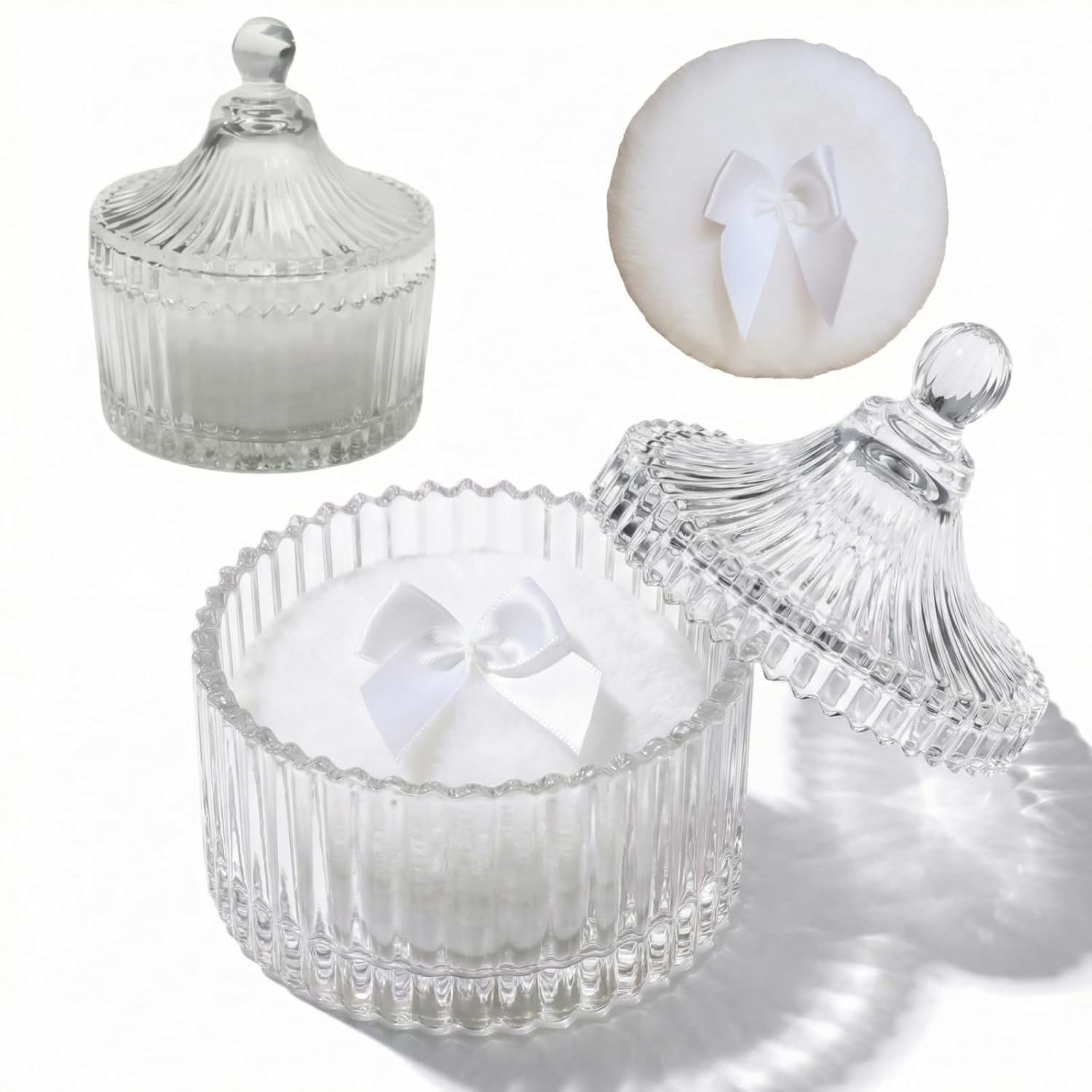
- Large Body Powder Puff and Crystal Container Set – 2 Pcs White — $7.99
Experience luxurious powder application with this exquisite two-piece set, featuring soft, reusable velour puffs and an elegant glass container. Designed for comfortable use, it's perfect for face and body glitter, talc, or loose powder, ensuring a smooth finish. - 40-Piece Mini Triangle Makeup Puff Set – Soft Setting Sponges — $6.99
Discover ultimate precision with this 40-piece set of mini triangle makeup puffs. Perfect for detailed application of foundation, powder, and concealer, these soft, reusable sponges ensure a flawless finish every time. - 7-Piece Makeup Sponge Set with Dust-Free Travel Case – Pink — $6.99
Achieve flawless makeup application with this 7-piece sponge set. Made from super-soft, non-latex material, these versatile sponges blend liquid, cream, and powder seamlessly. - 4-Piece Makeup Sponge Set with Holder & Case – Flawless Blending for All Cosmetics — $6.99
Achieve a flawless finish with this premium 4-piece makeup sponge set, complete with a holder and protective egg case. Perfect for blending creams, powders, and liquids, these super-soft sponges ensure seamless application and minimal product waste.
These are 4 of the items in Sponges and Puffs; the category page lists the rest with current stock and pricing.
Ordering, delivery and returns
Delivery is a flat $5.99, and free once an order reaches $49. Orders are packed in one to three business days and travel for five to ten, so plan on six to thirteen business days between placing an order and opening the box. Everything ships from Philadelphia, PA, to United States addresses.
If something is not right, the return window is 30 days from delivery for unused goods in their original packaging. The Shipping Policy and the Refund and Returns Policy carry the detail, and the FAQ answers the questions that come up most often.
Read next
- What a brush set’s piece count does not tell you
- Setting up a vanity you will actually keep tidy
- Sponge types explained: latex-free, dual-density and cushion
Browse everything in stock or ask us a question — we answer written enquiries within one business day.